
Keeping track when you order a lot online

If you order online ten to twenty times a year, your memory will do. Beyond that, things go wrong in a predictable way: not when you order, but in everything that comes after. A few fixed habits make more difference than any app.
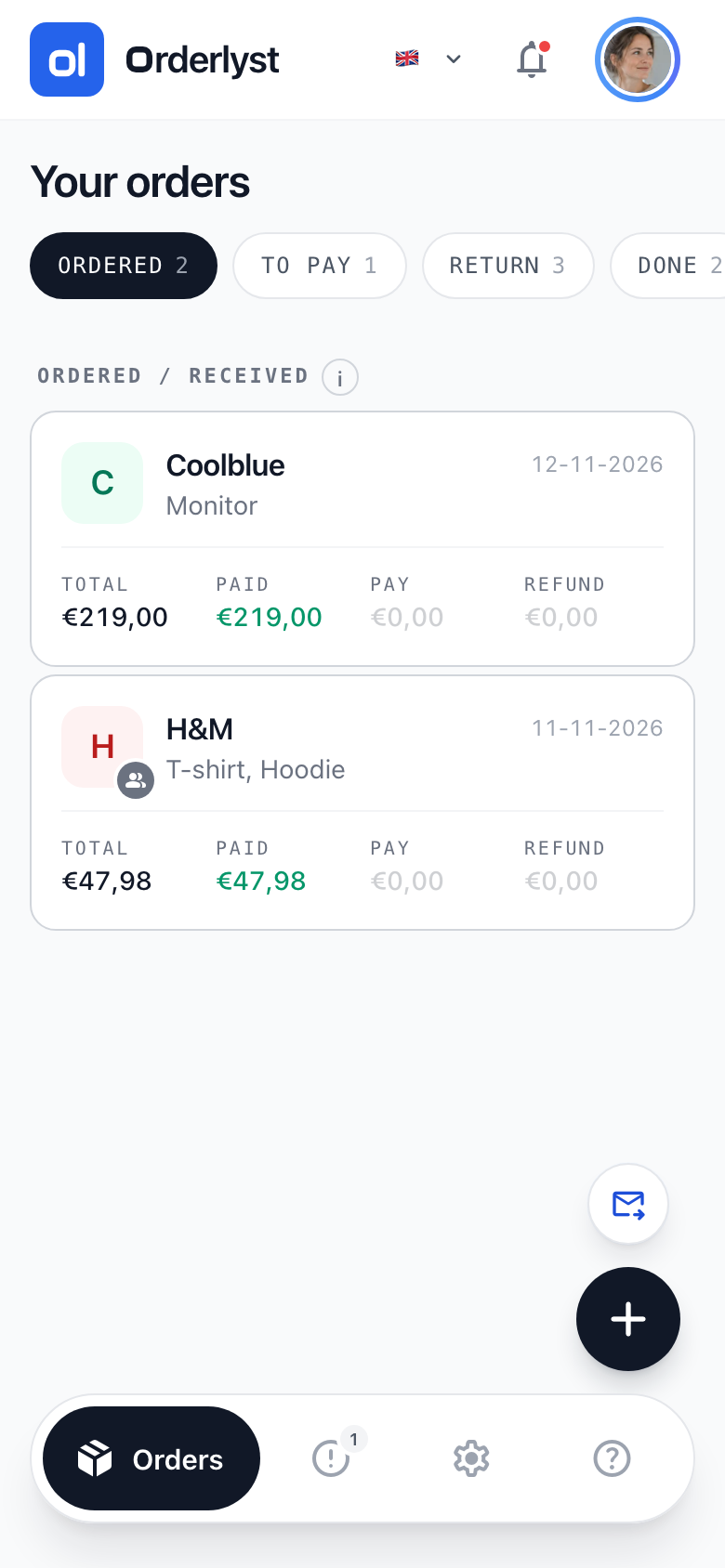
The problem is rarely that people do not know what they ordered. The problem is that an order has no clear end point. There is a moment you order, but the moment everything is settled never shows up in your inbox.
Four habits that make the difference
-
Write it down at the confirmation
Not on delivery, but as soon as the order confirmation comes in. That is the only moment you can be sure you will think of it.
-
Note the last day to return
Not the order date, but the date your choice becomes final. That is the date that is actually useful.
-
Update at one fixed moment
Going through the list once a week is enough. Nobody keeps up a daily routine.
-
Close an order only when the money is back
A return is done when the money has come back, not when the parcel has left.
What to record at the very least
- The shop and the order date
- What you ordered and what each item costs
- Whether you have paid yet, and if not, when it is due
- The last day you can return it
- How much you still get back on a return in progress
Anything more is usually dead weight. Tracking codes, for example, are relevant for two days and then never again; there is no need to copy them over.
Busy periods need a little extra
Around Black Friday, Christmas and the sales, almost everyone orders more than usual, and often from shops they never buy from otherwise. That is exactly when return deadlines get tangled. Two things help: keep gifts separate from your own purchases, and check your list in January for return deadlines that shifted over the holidays. Many shops extend their return period in December, but not all of them do, and the legal fourteen days still apply.
A list that tidies itself up
Orders where everything is paid and settled move to the bottom. What you see at the top is what still needs attention: an open payment, a return in progress or a deadline that is about to pass.
Frequently asked questions
How often should I update an overview like this?
One fixed moment a week is enough for most people. Add new orders at the moment you order; it takes half a minute and saves you from having to piece things together later.
Should I keep orders that are settled?
It does help. For a guarantee claim, or to look up what you paid, a settled order is still useful later, even if it does not need to be in your everyday list.
What do I do with gifts I order for other people?
Keep them apart from your own purchases, for example with a label. That way you can see at a glance in December which orders are yours and which are not, and which return deadline belongs to which group.
Start with an empty overview
Add your first order and see straight away what is still open.
Create free account
Checked on 28 October 2026